
























































































































































Conditions Associated With Eczema: Symptoms, Links, and Treatment
Author: RVLNSV PRASAD
Updated On: September 2026
About Us
Author Bio
Editorial Policy
Contact Us
Introduction
Eczema is often described as a skin condition because the most visible symptoms appear on the skin. But for many people, the story does not stop there.
Atopic dermatitis, the most common form of eczema, can occur alongside asthma, allergic rhinitis, food allergies, skin infections, sleep problems, and psychological difficulties. These are often described as comorbidities or associated conditions.
This distinction is important.
Having eczema does not mean that a person will automatically develop asthma, a food allergy, or another disease. Instead, several conditions can occur together because they may share genetic, immune, environmental, and skin-barrier factors.
Recent research has strengthened this broader understanding of eczema. A 2026 review described atopic dermatitis as a condition associated with a wide range of respiratory, gastrointestinal, dermatologic, ophthalmologic, immune-mediated, and mental-health conditions. The strongest established associations include asthma, allergic rhinitis, food allergy, and eosinophilic esophagitis. 2026 review of atopic dermatitis comorbidities
This article explains the conditions associated with eczema, how they may be connected, symptoms to watch for, practical management strategies, common mistakes, and the latest developments in eczema treatment.
Important: An association does not prove that eczema directly caused another condition.
Quick Answer
The most recognized conditions associated with eczema include asthma, allergic rhinitis, and food allergy. Eczema can also be associated with eosinophilic esophagitis and several other immune-mediated conditions.
Skin infections are better considered complications of eczema, while sleep problems and mental-health difficulties can occur as part of the wider burden of persistent or severe disease.
The relationship is complex. Some people with eczema develop several associated conditions, while others develop none.
The practical approach is to control eczema, protect the skin barrier, watch for new symptoms, and seek medical advice when symptoms suggest another condition.
Key Takeaways
- Eczema is associated with several health conditions, but it does not automatically cause them.
- Asthma and allergic rhinitis are among the best-established associated conditions.
- Food allergy is particularly important in some children with moderate-to-severe eczema.
- Eosinophilic esophagitis is another recognized atopic association.
- Skin infections are important complications of eczema.
- Persistent itching can interfere with sleep and daily life.
- Eczema can also be associated with anxiety, depression, and other mental-health difficulties.
- A positive food allergy test does not automatically mean that a food causes eczema flares.
- Unnecessary food elimination can create nutritional and allergy-related risks.
- Modern eczema treatment includes several topical, biologic, and systemic options.
- New or worsening breathing problems, infected skin, or serious allergic symptoms require medical attention.
What Is Eczema?
Eczema is a group of inflammatory skin conditions characterized by symptoms such as itching, dryness, redness, scaling, cracking, and sometimes oozing.
Atopic dermatitis is the form most often discussed when researchers examine the conditions associated with eczema.
The skin barrier plays an important role.
Healthy skin helps retain moisture and provides protection against irritants and microorganisms. In atopic dermatitis, abnormalities involving the skin barrier and immune system can contribute to inflammation and increased sensitivity.
Family history can also matter. The NHS notes that people are more likely to develop atopic eczema when a parent has eczema or when a close family member has asthma or hay fever. NHS: Atopic eczema
This helps explain why eczema can occur alongside other allergic conditions.
Why Are Other Conditions Associated With Eczema?
There is no single explanation.
Researchers believe several factors can overlap.
Immune-System Activity
Atopic dermatitis involves inflammatory immune responses in the skin.
Some of the same type 2 immune pathways are involved in other allergic conditions. A 2026 review identified shared type 2 inflammation and epithelial-barrier dysfunction as possible explanations for established associations between atopic dermatitis and conditions such as asthma, allergic rhinitis, food allergy, and eosinophilic esophagitis. 2026 review of atopic dermatitis comorbidities
Skin-Barrier Dysfunction
A weakened skin barrier can make it easier for irritants and allergens to interact with the skin.
It can also make the skin more vulnerable to microorganisms.
This is one reason why eczema management is not simply about reducing redness. Protecting the skin barrier is an important part of long-term care.
Genetics
Some people inherit genetic factors that influence both skin-barrier function and immune responses.
This can partly explain why eczema, asthma, and allergic rhinitis sometimes occur within the same family.
Environmental Factors
Weather changes, heat, sweat, irritants, fragrances, soaps, dust mites, and pollen can aggravate symptoms in susceptible people.
However, a suspected trigger is not automatically the cause of every flare.
Disease Severity
The burden of eczema tends to increase when the disease is persistent, widespread, or difficult to control.
A major 2026 review emphasized that atopic dermatitis can have effects beyond the skin and that clinicians should consider associated conditions when caring for people with the disease. Comorbidities of atopic dermatitis: Emerging evidence and clinical considerations
1. Asthma
This Asthma is one of the most important conditions associated with eczema.
Asthma affects the airways and can cause:
- Wheezing
- Coughing
- Chest tightness
- Shortness of breath
- Breathing difficulty during exercise
- Nighttime coughing
Having eczema does not mean that a person will definitely develop asthma.
However, the two conditions commonly occur together.
A major 2026 review identified asthma as one of the well-established atopic comorbidities associated with atopic dermatitis. 2026 review of atopic dermatitis comorbidities
What Is the Atopic March?
The term “atopic march” describes a pattern in which different allergic conditions may appear at different stages of life.
For some children, eczema develops first. Food allergy, allergic rhinitis, or asthma may subsequently appear.
But the atopic march is not inevitable.
A child with eczema can grow up without developing asthma or another allergic disease.
The important point is that eczema, asthma, allergic rhinitis, and food allergies can share biological pathways rather than one condition simply causing the next.
When Should Someone With Eczema Consider an Asthma Evaluation?
Talk with a healthcare professional if you notice:
- Repeated wheezing
- Unexplained shortness of breath
- Nighttime coughing
- Breathing difficulty during exercise
- Recurrent chest tightness
- Breathing symptoms after exposure to pollen or other suspected triggers
Do not automatically assume that breathing symptoms are part of eczema.
They may require a separate evaluation.
2. Allergic Rhinitis and Hay Fever
Allergic rhinitis is another well-established condition associated with atopic dermatitis.
It occurs when the immune system reacts to airborne allergens.
Common triggers include pollen, dust mites, and animal allergens.
Typical symptoms include:
- Sneezing
- Runny nose
- Stuffy nose
- Itchy nose
- Watery or itchy eyes
- Postnasal drainage
The 2026 review of atopic dermatitis comorbidities identifies allergic rhinitis as one of the established atopic conditions associated with eczema. PubMed: Comorbidities of atopic dermatitis
A Useful Everyday Clue
Some people notice a recurring pattern, such as
Outdoor exposure → sneezing → itchy eyes → nasal congestion → poorer sleep.
That pattern does not prove that pollen caused an eczema flare.
However, recording symptoms can help your doctor identify whether allergic rhinitis may be contributing to your overall health burden.
3. Food Allergy
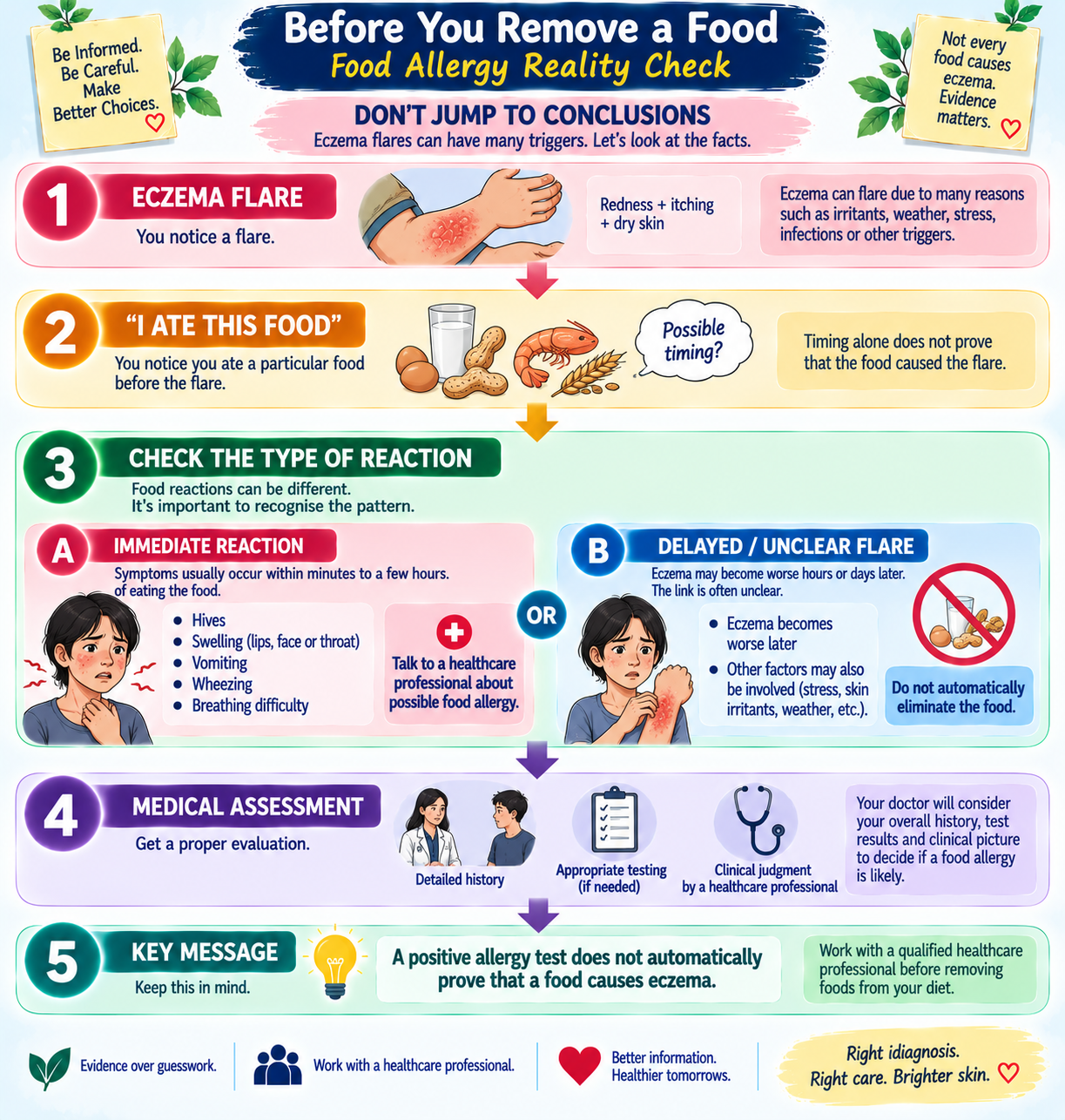
Food allergy deserves special attention, particularly in children with moderate-to-severe eczema.
Common food allergens include:
- Peanut
- Egg
- Cow’s milk
- Wheat
- Soy
- Tree nuts
- Fish
- Shellfish
But an important distinction is often missed:
Having eczema does not mean that a particular food is causing the eczema.
Food allergy and eczema can occur together without a specific food being responsible for every flare.
A 2026 review specifically examining the relationship between food allergy and atopic dermatitis discusses how the two conditions commonly coexist and why diagnosis and management require careful assessment. 2026 review: The Role of Food Allergy in Atopic Dermatitis
Why Random Food Elimination Can Be a Mistake
Removing several foods without medical guidance can lead to unnecessary dietary restriction.
It may also create nutritional problems, particularly in children.
The AAAAI/ACAAI practice guideline found that dietary elimination may provide only a small improvement in eczema for some people and emphasized the potential risks of unnecessary elimination. The guideline also warns that indiscriminate allergy testing can produce false-positive results and unnecessary food avoidance. AAAAI/ACAAI Atopic Dermatitis Practice Parameter
The American Academy of Dermatology similarly explains that food allergy is more common in children with moderate or severe eczema, but removing foods does not usually eliminate eczema by itself. AAD: Can food fix eczema?
A Better Approach
If a child or adult develops immediate symptoms such as hives, swelling, vomiting, wheezing, or throat tightness after eating a particular food, medical assessment is appropriate.
Do not begin a broad elimination diet simply because an online article lists certain foods as “eczema triggers.”
4. Eosinophilic Esophagitis
Eosinophilic esophagitis, often shortened to EoE, is another condition associated with the atopic disease spectrum.
It involves inflammation of the esophagus and can cause:
- Difficulty swallowing
- Food becoming stuck
- Chest discomfort
- Feeding difficulties
- Poor weight gain in some children
A 2026 study examined the risk of eosinophilic esophagitis among people with pre-existing asthma, allergic rhinitis, atopic dermatitis, or food allergy. PubMed: Risk of developing eosinophilic esophagitis with preexisting atopic conditions
This does not mean that everyone with eczema needs screening for EoE.
Instead, persistent difficulty swallowing or food-sticking symptoms should be medically evaluated.
5. Skin Infections
Skin infections are somewhat different from asthma, allergic rhinitis, and food allergies.
They are better described as complications of eczema.
Eczema can damage the skin barrier.
Scratching can create small breaks in the skin.
Microorganisms can then enter these damaged areas.
Staphylococcus aureus is commonly found on eczema-affected skin and can be involved in infection.
Signs that may suggest an infection include:
- Increasing redness
- Warmth
- Pain
- Swelling
- Yellow crusting
- Pus
- Rapid worsening
- Fever
- Feeling generally unwell
The NHS advises medical assessment when eczema becomes painful, swollen, warm, blistered, crusted, or rapidly worse, particularly when the person feels unwell. NHS: Atopic eczema
Eczema Herpeticum Is Different
Eczema herpeticum is a potentially serious viral infection that can occur in people with eczema.
It should not be treated as an ordinary eczema flare.
Rapidly developing painful blisters or small punched-out sores, particularly when accompanied by fever or feeling unwell, require urgent medical attention.
6. Sleep Problems
Sleep disturbance is an important but sometimes overlooked consequence of persistent eczema.
Severe itching can make it difficult to fall asleep.
It can also wake a person repeatedly during the night.
The following day may then bring:
- Fatigue
- Poor concentration
- Irritability
- Daytime sleepiness
- Reduced productivity
This can create a difficult cycle.
Itch → disrupted sleep → daytime fatigue → greater difficulty coping with symptoms.
Research has consistently linked atopic dermatitis with sleep disturbance.
More recent research is also examining the relationship between eczema, sleep, and mental health. A 2026 population-based study found an association between atopic dermatitis and depression and examined sleep disturbance as a possible pathway. Because the study was observational, it cannot prove that eczema directly caused depression. PubMed: 2026 study of atopic dermatitis, sleep disturbance, and depression
A Simple Sleep Strategy
Instead of focusing only on sleeping longer, try to address the factors disturbing sleep.
A practical evening routine may include:
- Follow your prescribed eczema treatment.
- Apply moisturizer according to your treatment plan.
- Keep the bedroom comfortably cool if heat worsens itching.
- Wear soft, breathable sleep clothing.
- Keep fingernails short.
- Avoid introducing several new skincare products before bedtime.
If itching repeatedly wakes you, discuss it with your dermatologist.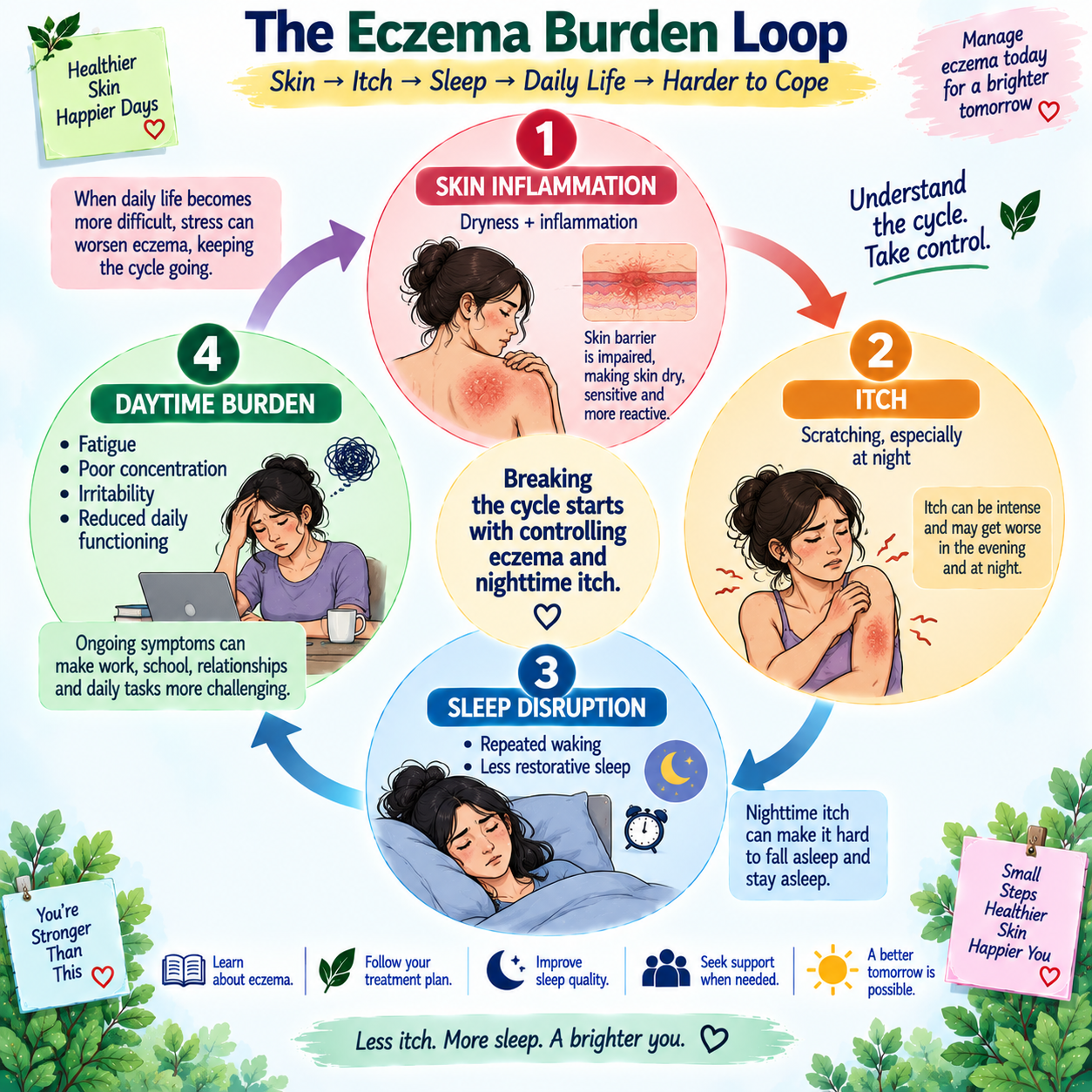
7. Anxiety, Depression, and Emotional Strain
Eczema can affect emotional well-being as well as physical comfort.
Visible rashes can affect confidence.
Persistent itching can become exhausting.
Poor sleep can make everyday activities more difficult.
Some people may avoid social situations because they feel uncomfortable about their skin.
Research reviews have found associations between atopic dermatitis and psychiatric conditions, including anxiety and depression, particularly in people with more severe disease. PubMed: Comorbidities of atopic dermatitis
This does not mean that eczema directly causes depression or anxiety in every person.
The relationship can involve several factors, including chronic itch, sleep disruption, social stigma, and the burden of managing a long-term condition.
People-First Approach
If eczema is affecting your mood, relationships, work, school, or sleep, tell your healthcare professional.
Mental health support does not mean that the skin condition is imaginary.
The physical symptoms are real.
The emotional burden can also be real.
Other Conditions Being Studied
Research into conditions associated with eczema is expanding beyond the traditional atopic march.
The 2026 review of atopic dermatitis comorbidities discusses associations involving respiratory, gastrointestinal, rheumatologic, neurologic, ophthalmologic, and endocrine conditions. It also describes emerging evidence involving immune-mediated diseases such as alopecia areata, vitiligo, inflammatory bowel disease, and autoimmune thyroid disease. 2026 review: Comorbidities of atopic dermatitis
These findings should be interpreted carefully.
An epidemiological association does not automatically mean that eczema causes another disease.
The strength of evidence also differs between conditions.
That is why responsible health content should distinguish between well-established associations, emerging research, and uncertain relationships.
What About Heart Disease, Diabetes, and Obesity?
Some studies have investigated relationships between atopic dermatitis and cardiometabolic or other systemic diseases.
However, this area is more complicated than the strong associations seen with asthma, allergic rhinitis, and food allergy.
Reviews have reported associations with some cardiovascular and metabolic outcomes, particularly in severe disease, while also noting that effect sizes and evidence are inconsistent for several conditions. Review of atopic dermatitis comorbidities and disease burden
Therefore, it is not appropriate to tell every person with eczema that eczema causes:
Your doctor should assess these conditions according to your personal risk factors rather than assuming that eczema itself is the cause.
A Simple Map of Conditions Associated With Eczema
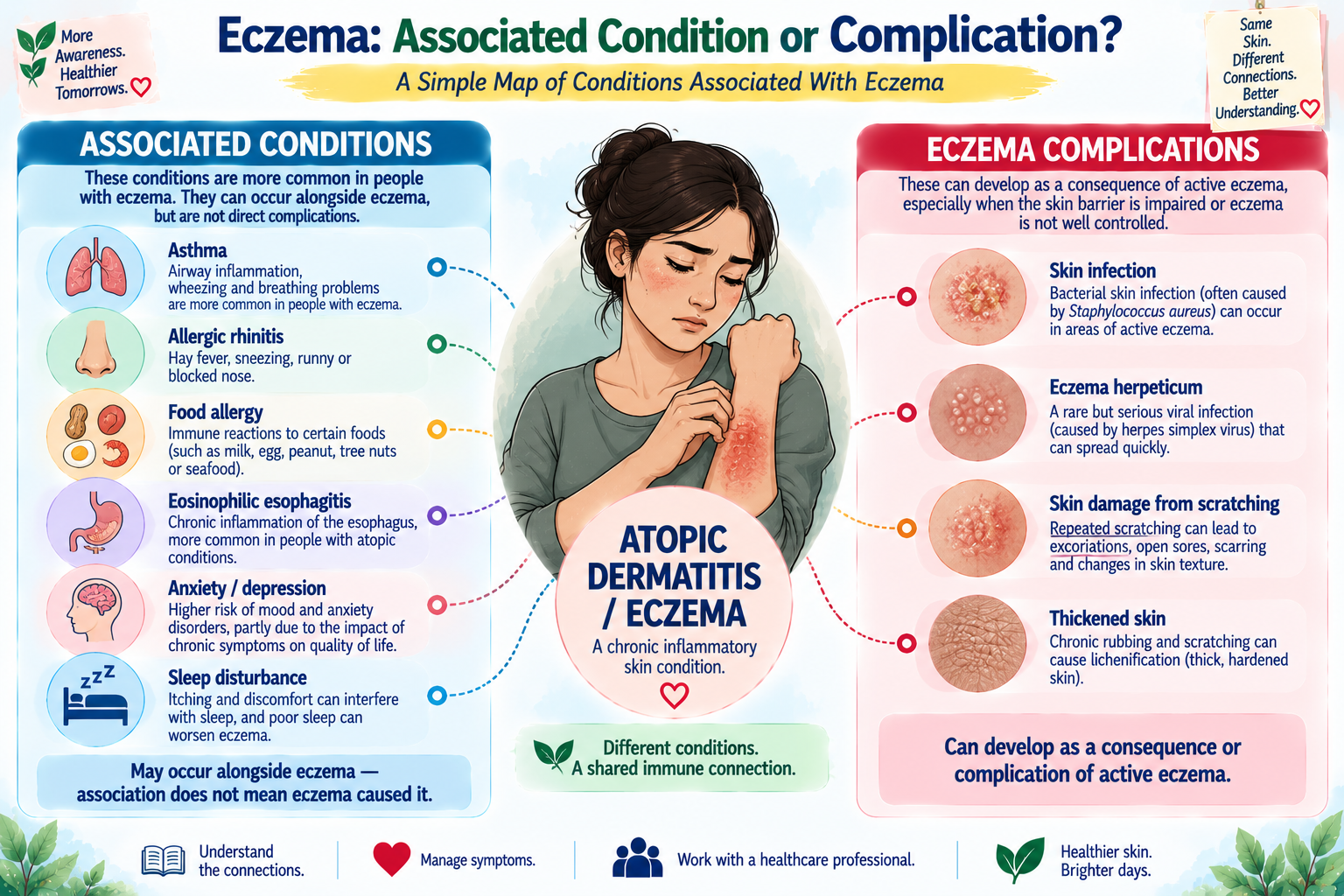
| Condition or problem | How it relates to eczema | Symptoms or signs to watch for |
|---|---|---|
| Asthma | Well-established atopic association | Wheezing, cough, breathlessness |
| Allergic rhinitis | Well-established atopic association | Sneezing, runny or blocked nose |
| Food allergy | Particularly important in some children | Hives, swelling, vomiting, breathing symptoms |
| Eosinophilic esophagitis | Recognized atopic association | Difficulty swallowing, food sticking |
| Skin infection | Important eczema complication | Pus, crusting, pain, warmth |
| Sleep disturbance | Often related to persistent itch | Frequent waking, daytime fatigue |
| Anxiety/depression | Associated, particularly with greater disease burden | Persistent low mood, anxiety, loss of interest |
| Other immune-mediated diseases | Emerging or variable evidence | Depends on the individual condition |
| Cardiometabolic conditions | Associations are reported, but evidence varies. | Depends on individual risk factors |
Practical Ways to Reduce the Burden of Eczema
There is no single home remedy that prevents every condition associated with eczema.
However, consistent eczema management can reduce symptoms and help protect the skin barrier.
Build a Simple Moisturizer Routine
Use the moisturizer recommended for your skin.
Consistency is usually more useful than having many different products.
The American Academy of Dermatology strongly recommends moisturizers as part of atopic dermatitis treatment. AAD: Atopic Dermatitis Clinical Guidelines
Do Not Keep Changing Products
Trying a new cream every few days can make it difficult to determine what is helping and what may be irritating your skin.
A simple routine is often easier to monitor.
Keep Nails Short
Keeping fingernails short can reduce the amount of damage caused by scratching.
This can be particularly useful for children who scratch during sleep.
Use a Symptom Diary
A symptom diary can be one of the simplest practical tools.
Record:
- Date
- Itch severity
- Sleep quality
- New skincare products
- Weather
- Exercise
- Illness
- Possible allergen exposure
- Suspected food reactions
- Medication changes
Do not use the diary to diagnose yourself.
Use it to identify patterns worth discussing with your healthcare professional.
Protect the Skin After Bathing
Bathing does not automatically make eczema worse.
The important factors include water temperature, cleansing products, bathing habits, and what you apply afterward.
The AAD guidelines include bathing and wet-wrap therapy among treatment approaches that may be appropriate in selected patients. AAD: Atopic Dermatitis Clinical Guidelines
Treat the Underlying Inflammation
If eczema repeatedly flares, simply trying to suppress itching may not be enough.
Depending on severity and location, a dermatologist may recommend topical corticosteroids, topical calcineurin inhibitors, PDE-4 inhibitors, JAK inhibitors, or other treatments.
Latest Eczema Treatment Developments
Eczema treatment has changed significantly in recent years.
Moisturizers and topical corticosteroids remain important, but they are no longer the only evidence-based options.
Current American Academy of Dermatology guidance includes strong recommendations for several topical and systemic treatments, including topical corticosteroids, topical calcineurin inhibitors, crisaborole, roflumilast, ruxolitinib, tapinarof, dupilumab, tralokinumab, lebrikizumab, and several oral JAK inhibitors for appropriate patients. American Academy of Dermatology: Atopic Dermatitis Clinical Guidelines
The choice depends on factors such as
- Age
- Disease severity
- Body areas affected
- Previous treatment response
- Other health conditions
- Pregnancy considerations when relevant
- Patient preferences
- Access and cost
The arrival of targeted therapies has changed how dermatologists approach moderate-to-severe eczema.
However, newer does not automatically mean better for every person.
Treatment should be individualized.
New 2026 Developments in Pediatric Eczema Care
Children deserve special consideration because eczema, food allergies, and other atopic conditions can interact during early life.
In April 2026, the American Academy of Dermatology published its first dedicated pediatric atopic dermatitis guidelines. The guidelines address prevention and treatment while emphasizing that children have different safety, dosing, and care considerations from adults. American Academy of Dermatology: First pediatric atopic dermatitis guidelines
This is particularly relevant for parents who are tempted to make major dietary or environmental changes without medical guidance.
Evidence-based pediatric eczema care should focus on appropriate skin care and treatment rather than automatically removing large groups of foods or relying on unproven remedies.
A Better Way to Think About Eczema Treatment
Instead of asking:
“What is the strongest eczema medicine?”
A more useful question is
“What level of treatment is appropriate for my eczema and associated problems?”
For mild disease, treatment may focus on:
- Moisturization
- Trigger management
- Appropriate topical medication
For persistent eczema, your healthcare professional may adjust the treatment plan based on how often symptoms flare, which areas of the body are affected, and how well previous treatments have worked. When eczema is moderate to severe or remains difficult to control, phototherapy, biologic medicines, or systemic therapies may be considered as part of a personalized treatment approach.
The AAD treatment guidelines provide evidence-based recommendations across topical, phototherapy, and systemic treatment options. AAD: Atopic Dermatitis Clinical Guidelines
Common Mistakes People Make With Eczema
Mistake 1: Assuming Eczema Causes Every Other Condition
Eczema is associated with several diseases, but association is not proof of causation.
Mistake 2: Removing Many Foods
A restrictive diet can create nutritional problems and unnecessary anxiety around eating.
Food elimination should be medically supervised when indicated.
Mistake 3: Using Random Allergy Tests
A positive allergy test does not automatically prove that a food is causing eczema.
The AAAAI/ACAAI guideline warns that indiscriminate testing can result in false-positive findings and unnecessary food elimination. AAAAI/ACAAI Atopic Dermatitis Practice Parameter
Mistake 4: Treating Infected Eczema as an Ordinary Flare
Pain, pus, crusting, warmth, rapid worsening, or fever can indicate infection.
Mistake 5: Ignoring Sleep
If itching repeatedly destroys your sleep, tell your healthcare professional.
Mistake 6: Using Multiple New Products at Once
This makes it difficult to identify possible irritants.
Mistake 7: Stopping Prescribed Treatment as Soon as the Skin Looks Better
Some treatment plans include maintenance strategies designed to reduce future flares.
Follow your clinician’s instructions rather than changing treatment independently.
My Personal Experience and People-First Insight
In my own family, I have seen how eczema can become more than a visible skin problem.
The difficult part was not simply seeing a rash.
It was the constant attention required.
Moisturizing had to become routine.
Itching could interfere with sleep.
Small changes in weather or skin irritation could make the situation frustrating.
What stood out to me was that consistency was more useful than constantly searching for a miracle product.
That experience also taught me an important lesson:
Personal experience can explain what living with eczema feels like, but it cannot replace medical evidence.
A family member’s improvement after changing a food, soap, or supplement does not prove that the same approach will work for everyone.
Unique, Easy-to-Do Strategies That Many Articles Overlook
Create a Flare Kit
Keep frequently needed eczema-care items together.
For example:
- Prescribed medication
- Regular moisturizer
- Soft clothing
- Clean towels
- Symptom diary
Having these items together can reduce the temptation to improvise when a flare starts.
Photograph Recurring Flares
If your rash repeatedly changes before a medical appointment, dated photographs may help your clinician understand how the condition changes over time.
Do not rely on photographs alone for diagnosis.
Track Sleep Separately From Itch
Many people record only how itchy their skin feels.
Try recording both.
For example:
Itch: 7/10
Sleep: 4/10
Over several weeks, this can show whether your treatment is improving nighttime symptoms.
Keep a New-Exposure List
When a flare appears, think about what changed during the previous few days.
Consider:
- New detergent
- New soap
- New cosmetic
- New clothing
- Travel
- Weather change
- Illness
- Stress
- Medication changes
This does not prove a trigger.
It simply gives you better information to discuss with a healthcare professional.
When Should You See a Doctor?
Arrange a medical assessment if:
- Your eczema is not improving with your usual treatment.
- Itching is repeatedly disturbing your sleep.
- You develop recurrent wheezing or breathing difficulty.
- You experience suspected food-allergic reactions.
- Your skin becomes painful, warm, or swollen.
- You notice pus or yellow crusting.
- Your eczema suddenly becomes much worse.
- You develop a fever or feel generally unwell.
- Swallowing becomes difficult, or food seems to stick.
- Eczema is affecting your mood, school, work, or relationships.
Seek urgent medical help for serious breathing difficulty, throat swelling, severe allergic reactions, or rapidly worsening infected skin.
What New Research Means for People With Eczema
The science around eczema is moving beyond the idea that it is simply a rash.
Recent research increasingly describes atopic dermatitis as a condition that can coexist with problems involving several body systems.
A 2026 review identified established associations with asthma, allergic rhinitis, food allergy, and eosinophilic esophagitis while also reviewing emerging evidence involving several immune-mediated, gastrointestinal, ophthalmologic, and endocrine conditions. 2026 review of atopic dermatitis comorbidities
A 2026 review in Nature Reviews Disease Primers also described atopic dermatitis as a major inflammatory skin disease associated with food allergy, asthma, allergic rhinitis, eosinophilic esophagitis, mental-health disorders, and infections. 2026 Nature Reviews Disease Primers: Atopic Dermatitis
These developments are important, but they should not be turned into alarming headlines.
More research does not mean that every person with eczema is at risk of developing multiple diseases.
The practical lesson is simpler:
Treat the eczema, watch the whole person, and investigate new symptoms when they appear.
What About Exercise?
Exercise is generally an important part of a healthy lifestyle.
However, sweat, heat, friction, and certain fabrics can aggravate eczema in some people.
Try these practical measures:
- Choose comfortable, breathable clothing.
- Change out of damp clothing after exercise.
- Shower appropriately after heavy sweating.
- Avoid excessive heat if heat clearly worsens your symptoms.
- Follow your usual moisturizing routine.
- Stay hydrated during exercise.
Do not stop exercising solely because you have eczema.
If exercise repeatedly causes severe skin reactions or breathing symptoms, discuss the pattern with a healthcare professional.
Medical Disclaimer
This article is for general educational purposes and is not a substitute for diagnosis or treatment from a qualified healthcare professional.
The conditions described here are associated with eczema, but association does not mean that eczema directly causes another disease.
Do not start prescription medicines, stop prescribed treatment, or begin a restrictive elimination diet based solely on this article.
Children with eczema and suspected food allergies should receive individualized medical advice, particularly before foods are removed from the diet.
Fitness Disclaimer
Exercise recommendations in this article are general wellness suggestions.
People with severe eczema, asthma, significant allergies, infected skin, or other medical conditions may need individualized exercise guidance.
Stop exercising and seek medical attention if you develop severe breathing difficulty, chest pain, fainting, or symptoms of a serious allergic reaction.
Author Note
Author: RVLNSV PRASAD
This article was written to explain the relationship between eczema and other health conditions in simple language.
The goal is not to suggest that every person with eczema will develop another disease.
Instead, the focus is on helping readers recognize important symptoms, understand current evidence, and know when professional medical assessment is appropriate.
Medical information changes as new research becomes available, so treatment decisions should always be discussed with an appropriately qualified healthcare professional.
Conclusion
The conditions associated with eczema extend beyond the skin.
Asthma, allergic rhinitis, and food allergy are among the most recognized associated conditions. Eosinophilic esophagitis is another important atopic association, while skin infections are significant complications of eczema.
Sleep disturbance and psychological difficulties can also add to the burden of persistent disease.
The relationship is complex.
Eczema does not automatically cause asthma.
A person with eczema does not automatically have a food allergy.
A positive allergy test does not automatically mean that a food should be removed from the diet.
The most useful approach is practical.
Protect the skin barrier.
Follow an evidence-based treatment plan.
Pay attention to sleep.
Watch for signs of infection.
Take breathing or allergic symptoms seriously.
Ask a healthcare professional about new or persistent symptoms.
Modern eczema care also offers more options than it did in the past. Current guidelines include several topical, biologic, and systemic treatments for appropriate patients. American Academy of Dermatology: Atopic Dermatitis Clinical Guidelines
The goal is not simply to make the rash look better.
It is to help the person live more comfortably while recognizing and appropriately managing health problems that may occur alongside eczema.
Frequently Asked Questions
What are the most common conditions associated with eczema?
Asthma, allergic rhinitis, and food allergy are among the most recognized conditions associated with atopic dermatitis. Eosinophilic esophagitis is another established atopic association, while skin infections, sleep disturbance, and mental-health difficulties can occur alongside eczema.
Can eczema cause asthma?
Eczema does not automatically cause asthma. The two conditions can share genetic, immune, and environmental factors, and asthma may develop in some people with childhood eczema.
Does everyone with eczema develop allergies?
No. Many people with eczema never develop asthma, allergic rhinitis, or food allergies.
Can eczema cause food allergies?
Eczema should not be described as directly causing food allergy. However, children with atopic dermatitis, particularly more severe eczema, have an increased risk of food allergy.
Should I stop eating foods that make my eczema worse?
Do not automatically remove foods from your diet. If you suspect a food allergy, discuss the reaction with a qualified healthcare professional or allergist. Unnecessary elimination diets can create nutritional and allergy-related risks. AAAAI/ACAAI Atopic Dermatitis Practice Parameter
Can eczema become infected?
Yes. A damaged skin barrier and scratching can increase the risk of bacterial, viral, and other infections.
Can eczema affect sleep?
Yes. Persistent itching can make it difficult to fall asleep or stay asleep. Sleep disturbance can also contribute to daytime fatigue and reduced quality of life.
Can eczema affect mental health?
Eczema is associated with anxiety, depression, and other psychological difficulties, particularly when symptoms are persistent or severe. Sleep disturbance may contribute to the overall burden.
What is the atopic march?
The atopic march describes a pattern in which eczema may appear early in life and be followed by conditions such as food allergy, allergic rhinitis, or asthma in some individuals.
Is there a cure for eczema?
There is currently no universal cure for atopic dermatitis, but many treatments can substantially control symptoms and reduce flares. Treatment should be tailored to disease severity and the individual patient.
Strong EEAT Medical Sources
- American Academy of Dermatology — Atopic Dermatitis Clinical Guidelines: View current treatment recommendations.
- American Academy of Dermatology — Pediatric Atopic Dermatitis Guidelines: View the 2026 pediatric guidance.
- American Academy of Dermatology — Food and Eczema: Can food fix eczema?
- AAAAI/ACAAI—Atopic Dermatitis Practice Parameter: View the evidence-based guideline.
- NHS—Atopic Eczema: View symptoms, treatment, and warning signs
- PubMed — 2026 Review of Atopic Dermatitis Comorbidities: Read the research review.
- PubMed—2026 Review: The Role of Food Allergy in Atopic Dermatitis: Read the latest review.
- PubMed—Atopic Conditions and Eosinophilic Esophagitis: Read the 2026 study
- PubMed—2026 Nature Reviews Disease Primers: Atopic Dermatitis: Read the latest comprehensive review
- PubMed — Comorbidities of Atopic Dermatitis: What Does the Evidence Say? Review the evidence
Related Posts
- Nutrient-8 Dense Foods for Immune System Support: A Comprehensive Guide to Boosting Your Immunity Naturally
- 11 Best Skin Lightening Treatments
- Best 5 Ways to Prevent Skin Cancer8 Best Poses of Yoga For Asthma Cure
- 8 Best Poses of Yoga For Asthma Cure









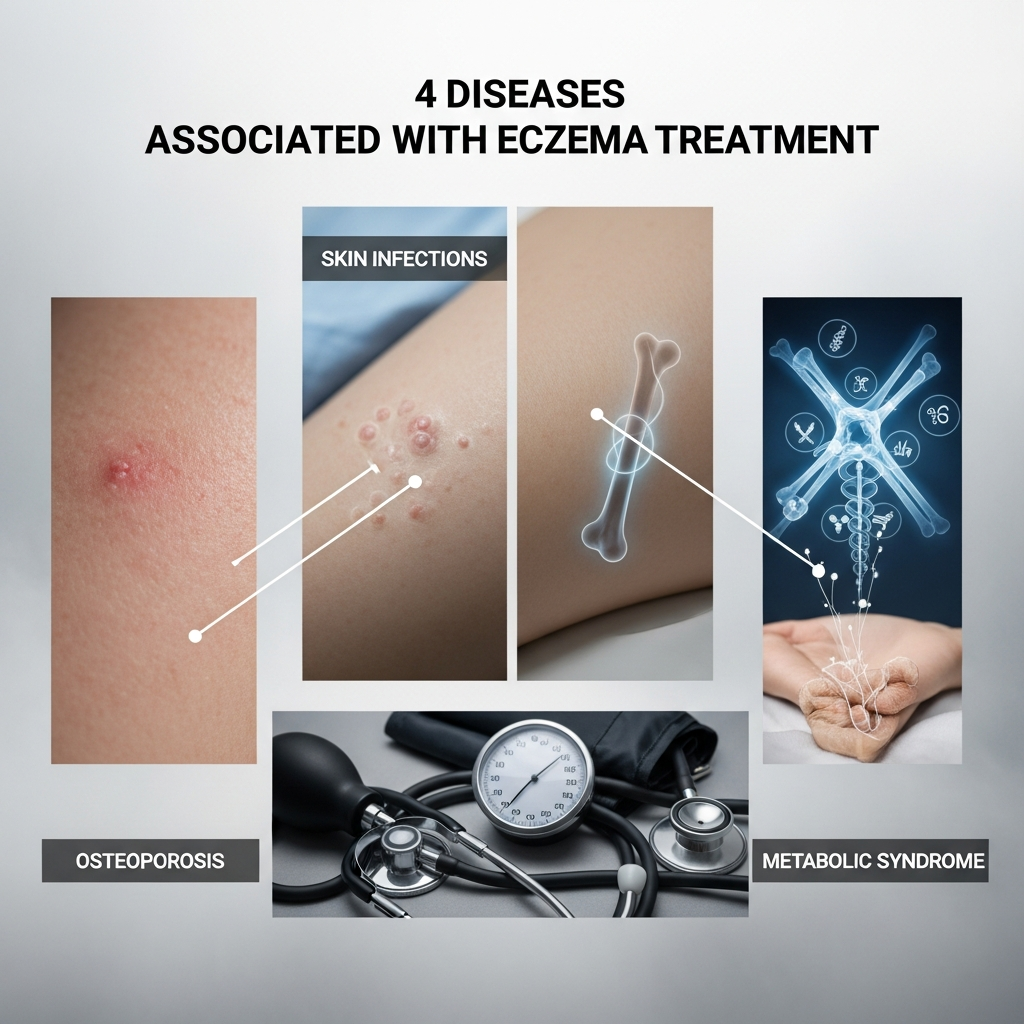
[…] 4 Diseases Associated With Eczema Treatment […]